Whether you’ve inherited a family heirloom or found something pretty in a vintage store, your antique silver could be worth a pretty penny. But how can you tell the difference between something that looks nice and something that has actual value?
The key to unlocking the hidden value in your silver is knowing what to look for. The value of antique silver is determined by a few key factors: the silver’s purity, the maker’s reputation, the date and assay marks, the item’s condition, and its weight. Understanding these, along with how to spot sterling silver hallmarks, is the first step in identifying your piece accurately.
So, to help you unlock the true value of your collection, let’s take a look at how to identify antique silver.
What Are Sterling Silver Hallmarks?
Sterling silver hallmarks are small stamped symbols applied to silver items to certify their origin, age, and purity. This certification is usually regulated by assay offices and confirms that the item meets legal fineness standards. Silver hallmarks usually include a purity mark, an assay office mark, a maker’s mark, and a date letter.
So, just like you would require provenance and authentication evidence before buying fine art, silver hallmarks give buyers, collectors, and sellers the information they need to understand the true value of a piece, as well as protect them from fraud.
Visual Guide to Common Sterling Silver Hallmarks
To help you understand what to look for, let’s take a look at an example of a sterling silver hallmark.
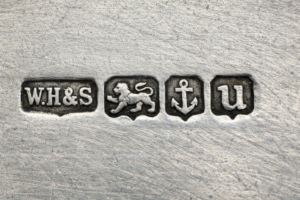
This lion passant is one of the most common British sterling silver hallmarks. This shows valuation specialists that it is sterling silver and contains at least 92.5% pure silver. Introduced in England in the 16th century, the lion passant is a legal guarantee of purity rather than a maker’s mark. When found alongside other hallmarks (such as a town mark or date letter), it helps authenticate the piece and place it within a recognised assay system.
Key Factors That Determine the Value of Antique Silver
Knowing how to look for antique silver hallmarks is important, but to unlock the true value of your silver, you also need to understand what each of the factors considered part of the hallmark actually means.
1. Silver Purity (Sterling vs. Other Grades)
The silver purity of your item determines the amount of precious metal it contains. The higher the purity of the silver, the higher the value.
Sterling silver is legally defined as 92.5% pure silver, with the remaining 7.5% usually made up of copper for strength and durability. So, items with sterling silver hallmarks usually indicate a decent intrinsic value. Fine silver and Britannia silver are also high in purity (99.9% and 95.8% respectively), with coin silver and silver plate holding far lower intrinsic value.
2. Maker’s Mark & Reputation: Who Made It and Why It Matters
While silver content and purity set the baseline value of a piece, links to a specific silversmith, firm, or workshop can trace your antique’s history and significantly raise its value. For example, Australian pieces by William Kerr, Stokes & Sons, and W.J. Sanders are worth looking out for, along with prominent British names such as Paul Storr, Elkington & Co. and Walker & Hall.
3. Date Letter: When Was It Made?
Date letters confirm production year, which can influence buyer appeal and collectability. Look for dates from sought-after periods, such as Georgian or Arts and Crafts, while also keeping an eye out for pieces made around historically significant dates.
4. Assay Office Mark: Where Was It Tested?
Because they tell us about the origin of the piece as well as where it was tested, assay marks can affect how much antique silver is worth. Different marks represent different areas, particularly in the UK. For example, a lion passant for London, an anchor for Birmingham, or a castle for Edinburgh. These assay marks can significantly influence the value of silver, particularly if the assay mark is from an area historically associated with superior craftsmanship, prestigious makers, or limited production.
5. Condition: Original Finish vs. Over-Restored Silver
Antique silver with its original finish (referred to as natural patina) generally holds more value than restored silver. Over-restoring silver, particularly with too much polishing, can reduce value by thinning the metal, softening engraved details, and erasing sterling silver hallmarks. So, don’t be put off by your silver looking a little weathered — this can often be a good thing.
6. Weight: More Than Just Scrap Value
A final key factor when it comes to how to identify the value of antique silver is weight. While this is fundamental to what the antique silver is worth, it’s really only a starting point. In fact, collectible factors, such as design, age, maker, rarity, condition, and provenance, can push the value of antique silver far beyond its baseline melt value.
Why Hallmarks Matter More Than You Think
Sterling silver hallmarks are essential for authenticating, valuing, and identifying antique silver. Hallmarks take the guesswork out of identifying antique silver and provide tangible evidence that underpins authenticity, attribution, and value. Clear sterling silver hallmarks therefore reduces uncertainty and increases buyer confidence, which can help you get a better price for your antique silver.
When Should You Get a Professional Silver Valuation?
Knowing how to identify antique silver is helpful when assessing whether or not to buy or sell your silver. However, to get an accurate assessment before selling, insuring, or dividing inherited silver, it’s always worth getting a professional valuation from experts like Christian McCann Auctions.
Find Out What Your Antique Silver Is Really Worth
Ready to discover how much your antique silver is worth? With over thirty years of experience in the antiques industry, our valuations team is a trusted source for antique silver among buyers and sellers alike.
Get in touch with our antique valuations experts today for a professional, reliable, and no-obligation valuation. And, if you choose to sell, our team can also help guide you on the next steps or consign your items to auction.