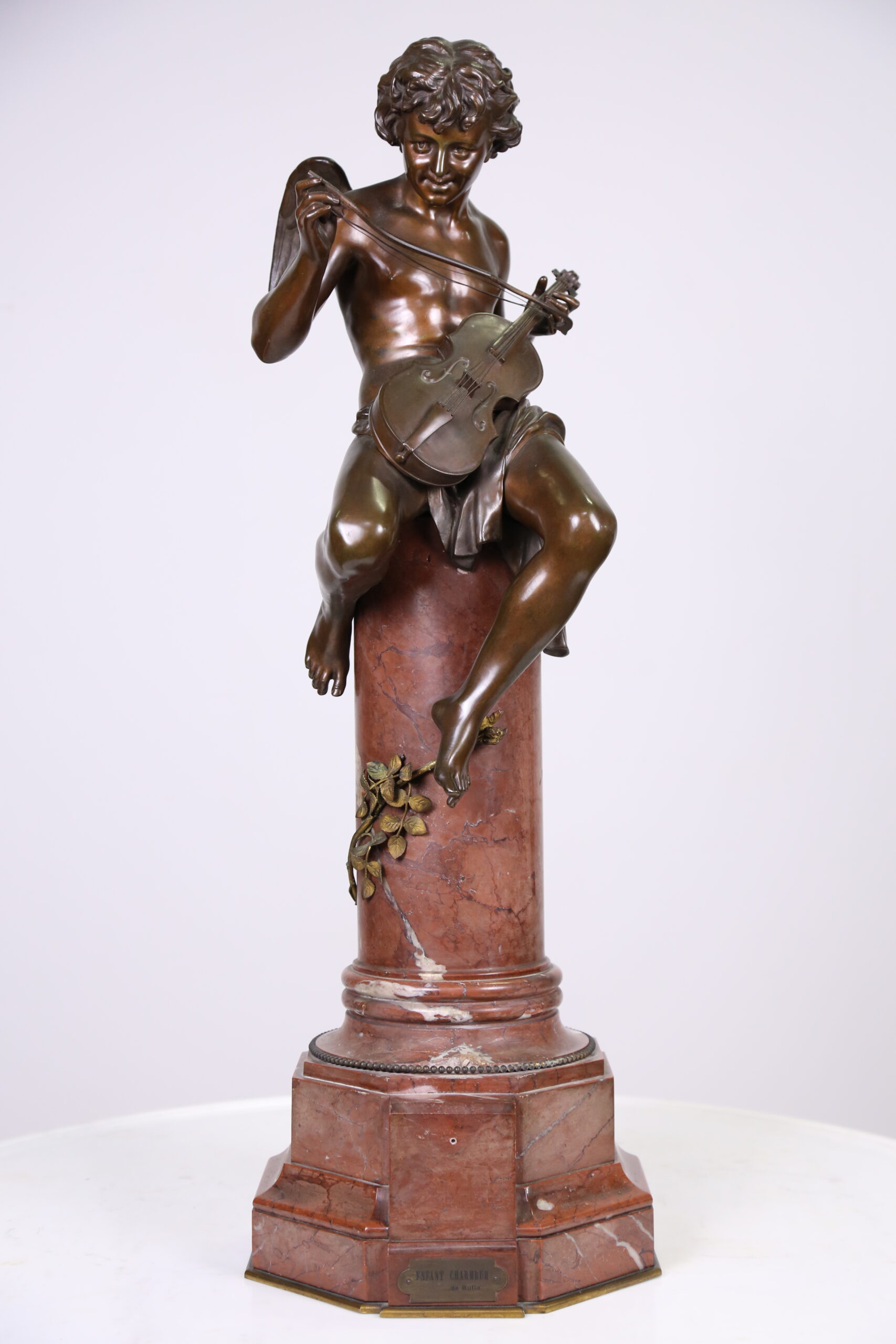
Whether you’ve inherited some from a loved one or want to build a collection, this guide is here to help you understand how to value bronze sculptures.
From how bronze sculptures are made, to the factors like foundry practices, patina and finish that influence their value, we’ll cover all the essential information you need to make smart and informed choices around buying, selling or collecting bronze sculptures.
How Are Bronze Sculptures Made?
Bronze sculptures are commonly made in a foundry using a process called the lost-wax technique. The artist’s original model is duplicated in wax, encased in a ceramic shell, and then the wax is melted out to leave a cavity for the molten bronze. This process ensures precision, detail and structural integrity, which ultimately affects the final artwork’s quality and value.
Understanding Quality in Bronze Sculptures
The quality of bronze sculptures is largely determined by craftsmanship, detail, weight and proportions. If you’re wondering how to value your sculpture, you need to keep an eye out for a few key things:
Patina and Finish
Patina is the coloured layer that forms on a sculpture’s surface. This process occurs naturally over time through atmospheric oxidation, or it can be accelerated by the artist using heat and chemicals. A rich and well-preserved patina can significantly enhance both a bronze sculpture’s visual appeal and its market value.
Foundry Marks and Signatures
Foundry marks, artist signatures and edition numbers are important to authenticate the work and determine its provenance. This guides buyers and sellers to determine the sculpture’s exact era and production quality, greatly impacting its value.
Why Artists Choose Bronze for Sculpture
Artists frequently choose bronze for their sculptures for its durability and incredible tensile strength. This enables them to capture fine detail, create dynamic shapes and work with delicate extremities that would otherwise crack or collapse in marble or clay. As molten bronze expands slightly into every crevice of the foundry mould as it cools, it stunningly captures all the minute details and intricate textures of the artist’s original model
History of Bronze Sculpture
Artists have been working with bronze for almost 5,000 years. From prehistoric tools to prestigious modern art, there’s no shortage of fascinating and valuable sculptures on the fine art market.
To truly determine whether bronze sculptures are a good investment, it’s important to understand the history of the medium as well as your piece’s place within that history:
Prehistoric and Ancient Bronze Sculpture
Dating back to 3,000 BCE, early civilisations in Mesopotamia, Egypt, China and the Indus Valley discovered that combining copper with tin created a highly durable metal. China’s striking Sanxingdui bronzes from the 11th and 12th century BC were used as ceremonial vessels and status symbols.
Classical Greek and Roman Bronze Sculpture
This is the era when the hollow lost-wax technique was popularised and used to create life-sized figures in active poses. Classic Greek examples include the Artemision Bronze. Later, Roman artisans adopted these methods and created bronze sculptures for wide distribution.
Medieval Bronze Sculpture
Large-scale bronze sculptures declined in Europe after the fall of Rome. However, there are a few noteworthy exceptions, including the 11th-century Bernward Doors at Hildesheim in Germany. Bronze sculptures from this era are less common, which can often increase market value.
Renaissance Bronze Sculpture
This period saw a huge revival in monumental bronze sculptures. This was largely spearheaded by the likes of Donatello and Ghiberti. In fact, Donatello’s David (c. 1440) became the first free-standing nude statue cast since antiquity. The Renaissance period also birthed and popularised the small bronze statuette, which increased the accessibility of bronze sculptures and created a new market for private collectors.
Mannerist Bronze Sculpture
The Mannerist era (1520–1600) saw artists pushing the physical boundaries of the medium. Pieces from this era often have elongated proportions and display theatrical emotions as well as twisted and complex poses. Giambologna was a popular Italian Mannerist sculptor from this period.
Neoclassical Bronze Sculpture
The rediscovery of Pompeii sparked a nostalgia for classical restraint and idealised symmetry. Master sculptors like Antonio Canova moved away from dramatic and boundary-pushing sculptures, favouring refined and highly polished bronzes instead.
Bronze Sculpture in the 19th Century
The mechanical and technical advancements of the Industrial Revolution democratised bronze production and allowed commercial foundries to mass-produce smaller sculptures for the rising middle class. Meanwhile, French animaliers like Antoine-Louis Barye popularised sculpting animal subjects. Towards the end of this century, Auguste Rodin paved the way for modernism by using expressive, textured surfaces to bring monumental sculptures to life.
Modern Bronze Sculpture
The avant-garde artists of the 20th and 21st centuries moved away from realism and played with abstract forms, existential themes and negative space. Popular sculptors from this period include Alberto Giacometti and Henry Moore.
How to Value a Bronze Sculpture
Determining a bronze sculpture’s value is about understanding the piece’s rarity, provenance (its origin and history of ownership), and condition (including structural integrity and the state of the original patina). The artist’s reputation is also a key factor.
Highly sought-after, rare or limited-edition castings from prestigious foundries generally command premium pricing. However, market trends can fluctuate depending on a variety of factors.
Understanding Market Value
The market value for bronze sculptures is constantly in flux. Factors like collector demand, historical sales data, public auction results and the artist’s popularity can all impact a sculpture’s value, and these can all change continuously over time.
Consulting specialist art valuers can ensure you are fully aware of all of these contributing factors. They expertly work with fine and decorative art, and it’s their job to know the history, market trends and other factors that impact a piece’s value at any given time.
Are Bronze Sculptures a Good Investment?
Bronze sculptures are highly durable and have miniscule long-term maintenance costs by comparison to other media like charcoal drawings. They can also be financially stable assets that hedge against inflation and allow you to diversify your wealth portfolio.
On the other hand, bronze sculptures are low-liquidity investments and market trends can be unpredictable. However, if you enjoy fine and decorative art, it’s important to factor in your visual enjoyment and aesthetic value into your decision.
Ultimately, if you have an interest in fine art and art history, a bronze sculpture can be a worthwhile investment, provided that you make an informed purchase decision based on its rarity, provenance, condition and market trends.