Key Takeaways
- Five visual clues can help date any piece
- Georgian jewellery is the rarest – and the most valuable
- Art Deco is the most sought-after era at auction
- “Antique” and “vintage” are not the same thing
Whether you’ve inherited a family locket or found a beautiful brooch at an antique store, understanding a piece of antique jewellery’s history can help unlock the hidden stories behind it as well as clarify its value and collectability.
From Art Deco jewellery and Georgian jewellery through to Victorian and Edwardian jewellery, this article will guide you through each period so you can identify pieces based on their materials, motifs, gemstones and clasp styles.
So, whether you’re dealing with your family estate or heading to antique jewellery auctions, you’ll be able to make informed decisions about buying or selling. Or, if you prefer a professional assessment, our Christian McCann antique jewellery specialists are here to help.
How to Identify the Era of Antique Jewellery
We’ll dive into each specific era in more detail below. But, broadly speaking, there are five key markers you should pay attention to when trying to identify the era of antique jewellery.
- Metal colour and type: Yellow and rose gold generally indicate Georgian jewellery or Victorian jewellery; white metals such as platinum or white gold are indicative of Edwardian jewellery or Art Deco jewellery.
- Clasp and fitting style: C-clasp styles were popular with pre-1900s jewellery, while box clasps suggest it’s Edwardian or later. Meanwhile, safety catches indicate that the piece was made after World War II.
- Gemstone cut: Pre-1900s jewellery has rose-cut or table-cut, while an old European cut suggests it was made between 1890 and 1930. Meanwhile, baguette or emerald cuts were popularised after the 1920s.
- Design motif: Georgian and Victorian jewellery tend to have natural motifs such as flowers and birds, while Edwardian jewellery features lace and garlands. Meanwhile, Art Deco jewellery often features geometric and graphic motifs.
- Construction: Hand-wrought irregular surfaces tend to be Georgian, while any jewellery with machine-made consistency suggests it was from the Victorian era onwards.
Having the jewellery periods explained is great for helping you narrow down the era of your antique jewellery. However, for a more definitive date as well as other information about the date and value of a piece, it’s worth getting a professional jewellery appraisal.
Georgian Jewellery
Georgian jewellery is the hardest to find at auction due to its age and handmade craftsmanship. Genuine Georgian jewellery therefore commands significant premiums at auction. The most commonly found pieces to keep an eye out for include brooch-and-earring parure sets, mourning lockets with hair compartments, girandole earrings (chandelier-style with three drops), memorial rings with enamel and hair, and serpent rings.
When looking for Georgian jewellery, there are some key identifying features to look out for.
- Materials: Hand-wrought gold and silver (often gilded or backed), pinchbeck (a copper-zinc alloy that mimics gold), paste stones, seed pearls, ivory or tortoiseshell. Human hair is also a common material in mourning jewellery.
- Gemstones: Rose-cut and table-cut diamonds frequently set with foil backing to enhance brilliance under candlelight are popular in Georgian jewellery. Garnets, topaz, paste, seed pearls and coral are also common.
- Motifs: Naturalistic themes, including flowers, birds, feathers and wheat sheaves. Mourning and memorial jewellery feature woven hair, black enamel and inscriptions. Serpents symbolising eternity also appear in Georgian rings and bracelets.
- Georgian techniques. Cannetille structures (intricate twisted gold wirework) and repoussé (hammered relief work) are hallmarks of Georgian jewellery.
- Clasp styles: A simple hand-formed C-clasp (a single hook with no safety mechanism). There are no standardised fittings – every piece is unique.
Victorian Jewellery
Spanning 64 years, this was the most prolific period for antique jewellery. As such, Victorian jewellery is the most common era you’ll find in Australian estate sales.
Victorian jewellery pieces commonly seen at auction include mourning brooches and lockets with hair compartments, sentimental brooches (hearts, anchors, clasped hands), Scottish pebble brooches, gold-and-enamel lockets and full- and demi-parure sets (matching brooch, earrings, bracelet and necklace).
Early/Romantic Period (c.1837–1860)
These highly sentimental pieces expressed love, loyalty and grief. Think hearts, clasped hands, serpents, anchors and forget-me-nots. Popular materials include yellow gold, seed pearls, enamel (particularly dark enamel for mourning), turquoise and amethyst.
Following Prince Albert’s death in 1861, deep mourning jewellery surged. Jet (hard black gemstone from Whitby), vulcanite (black rubber) and hair-work lockets became fashionable.
Mid/Grand Period (c.1860–1885)
These are heavier and more ornate designs inspired by archaeological revivals. Picture Egyptian (scarabs, lotus) and Greek, Etruscan (granulation and wirework revival by Castellani and Giuliano). Scottish pebble jewellery (agate set in silver) also became popular due to Queen Victoria’s love of Balmoral. Victorian jewellery from this period also features large coloured gemstones like garnets, amethysts, turquoise, coral and malachite.
Late/Aesthetic Period (c.1885–1901)
Victorian jewellery from this period shows a lot of Japanese influence, with features like asymmetry, naturalistic insects and fauna, silver settings and Art Nouveau curves. Other popular features include diamond and paste cluster brooches, silver-topped gold settings and roller catches (an improved C-clasp).
Edwardian Jewellery (c.1901–1915)
Referred to as the ‘lace age’, Edwardian jewellery is largely defined by its extraordinarily delicate, feminine, garland-style designs made possible by newly workable platinum. This is a sharp visual contrast to the heavier Victorian pieces that preceded it.
Edwardian jewellery pieces commonly seen at auction include lavalieres (fine drop necklaces on delicate chains), long sautoir pearl necklaces, diamond and pearl bar brooches, platinum bangles with millegrain diamond settings, and chokers.
Some key features to look out for with Edwardian jewellery include:
- Materials: Platinum, white gold and millegrain settings (tiny bead-like borders along the edge of settings).
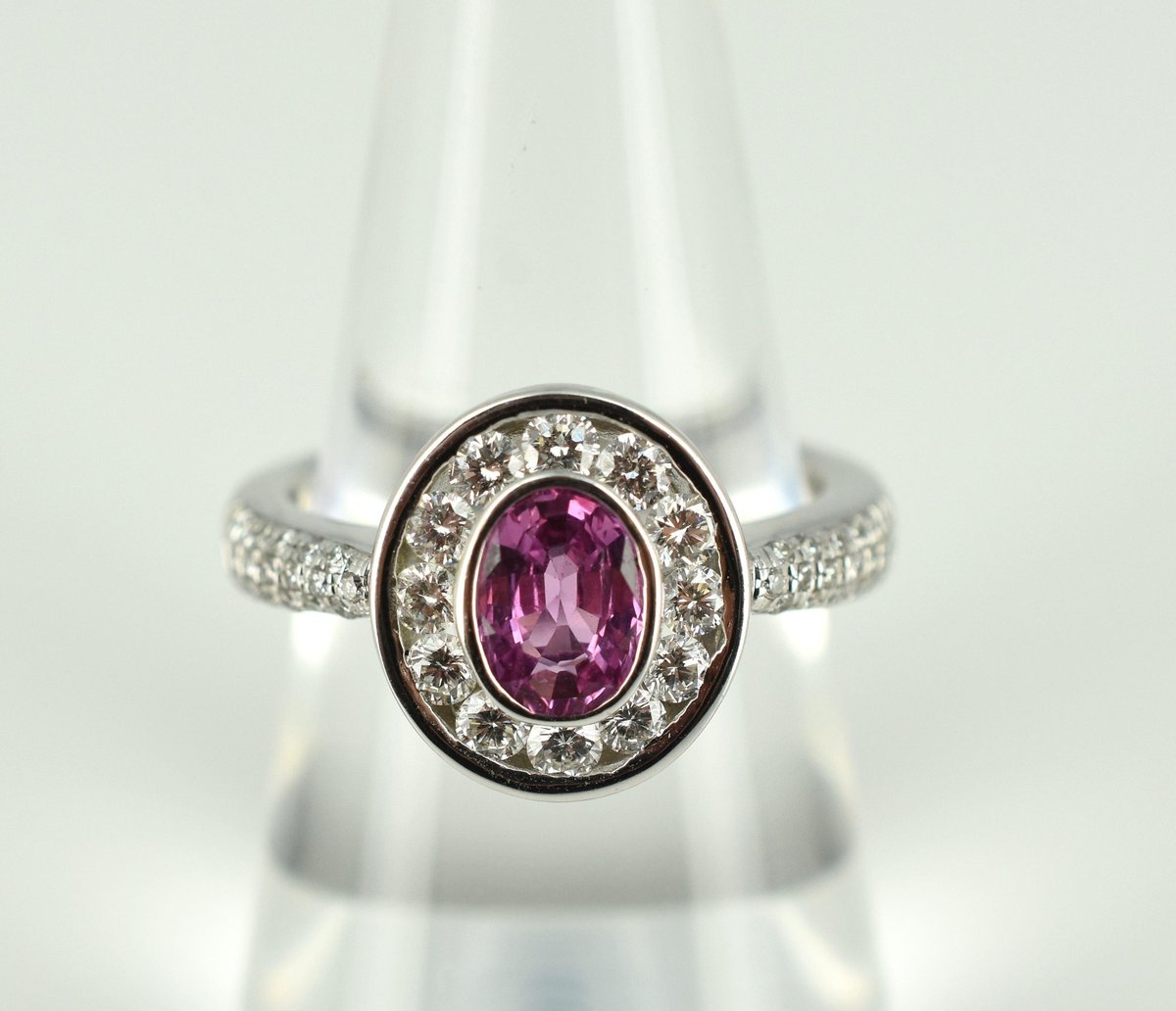
- Gemstones: Diamonds (rose-cut and old European cut), natural pearls, aquamarine, light-coloured amethyst and pale sapphires.
- Motifs: Garlands, ribbons and bows, swags and festoons, lace-like filigree, floral wreaths and foliate scrolls.
- Clasp styles: Box clasps, tongue-and-groove barrel clasps on necklaces and safety pin backs on brooches.
Edwardian jewellery pieces are light and delicate by nature. So, when valuing, selling or buying Edwardian jewellery at auction, condition is absolutely critical.
Art Deco Jewellery (c.1920–1939)
Bold, graphic, colourful and immediately recognisable, Art Deco jewellery is often the most sought-after at auction. Common pieces found at auction include cocktail rings with a large central diamond flanked by geometric accent stones, geometric bracelets, large geometric dress brooches/clips, long sautoir necklaces with onyx and diamond drops, vanity cases and cigarette cases.
Art Deco jewellery pieces by Cartier, Van Cleef & Arpels, Chaumet or Boucheron command significant premiums at our current auctions, and having a paper label or original box can significantly affect the value.
Key identifying features of Art Deco jewellery include:
- Materials: Platinum, white gold, high-contrast onyx, coral, jade, lapis lazuli and carved rock crystal.
- Gemstones: Diamonds in geometric cuts (baguette, emerald and Asscher). Deep-coloured sapphires, rubies and emeralds paired with diamonds for dramatic colour contrast. Rock crystal quartz for transparency. Carved sapphires and rubies in Indian-influenced “tutti frutti” bracelets (Cartier’s signature) were also popular.
- Motifs: Strictly geometric – circles, triangles, squares, chevrons, zigzags, stepped skyscraper profiles, fan and sunburst forms. Egyptian revival motifs also surged after the 1922 discovery of Tutankhamun’s tomb, including scarabs, lotus flowers, the eye of Horus and pyramids.
- Clasp styles: Lock clasps, box clasps, tongue-and-groove barrel clasps and double-pin fittings on large dress clips/brooches.
Frequently Asked Questions About Antique Jewellery
Which jewellery era is most collectible?
Art Deco jewellery is generally the most collected at auction, driven by strong design recognition, high-quality materials (platinum and fine gemstones) and international demand. Georgian jewellery is the rarest due to age and the lack of machine production, making genuine examples extremely valuable when they do appear.
Victorian jewellery has seen renewed collector interest, particularly in sentimental and mourning pieces, which now attract a distinct collector base.
Ultimately, collectability depends on the specific piece: maker, condition, materials, provenance and current market trends all influence what commands the highest prices at any given auction.
What is the difference between antique and vintage jewellery?
Antique refers to a piece that is at least 100 years old. This means Georgian, Victorian, Edwardian and the earliest Art Deco jewellery (c.1920–1924) meet the antique threshold.
Vintage is a looser term typically applied to pieces that are at least 20–30 years old but not yet antique; covering later Art Deco (1925 onwards), Retro/Wartime (1940s), Mid-Century (1950s–1960s) and subsequent eras.
In practice, auction houses and dealers sometimes use “vintage” informally for any pre-owned piece with period character, so it is always worth confirming the actual estimated date with a specialist.
How can I date jewellery by style?
A few quick visual tests can narrow down an era:
- Metal colour: Yellow or rose gold is likely Georgian or Victorian; white metal (platinum or white gold) is probably Edwardian or Art Deco.
- Clasp type: A simple C-clasp (single hook) is usually pre-1900, a box clasp is Edwardian or later, and a safety catch on a brooch is post-1900.
- Gemstone cut: Irregular rose-cut is pre-1900; symmetrical old European cut (round, high crown) is 1890–1930; and geometric baguette or emerald cut indicates a piece is from the 1920s onwards.
- Design aesthetic: Naturalistic and sentimental jewellery is usually Georgian or Victorian. Airy lace and garlands are often Edwardian, while jewellery featuring bold geometry and colour contrast is Art Deco.
For a definitive assessment, it’s worth getting a professional jewellery valuation to examine hallmarks, metal testing, construction techniques and gemstone grading.
Get a Professional Jewellery Valuation in Melbourne
Understanding the era of a piece is the first step to unlocking its true value. And to get an accurate and reliable understanding of your jewellery’s history and market value, it’s worth getting a professional appraisal.
Whether you’ve inherited family jewellery, found a rare piece in the back of a drawer or purchased something unique in an antique store, our team of specialists at Christian McCann Auctions are on hand to help. With decades of experience, we have a deep understanding of all four major antique jewellery eras. We can give you tangible information about the value and authenticity of your pieces, as well as advise you on whether consigning them to upcoming jewellery auctions is the right path.
Give us a call today or visit our office in Abbotsford, Victoria for an appraisal. No pressure, no obligation – just specialist antique jewellery advice you can count on.